
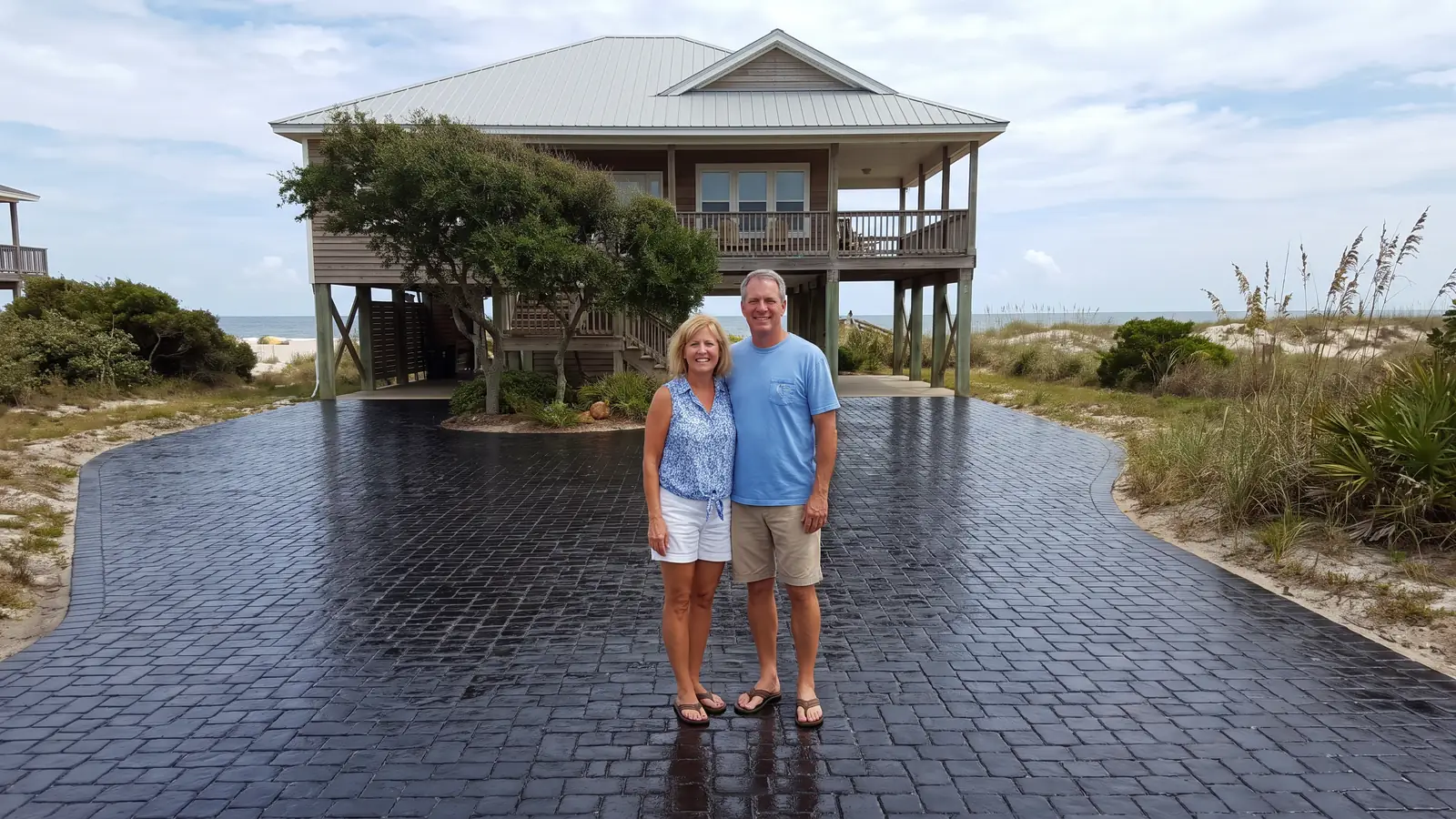
Paver sealing for San Jose homes
Paver Sealing in San Jose, FL
From waterfront mansions to wood-frame starters, San Jose pavers get a free sealing estimate when you call (904) 468-6386.
- Brings out deeper paver color
- Fresh joint sand helps lock pavers in place
- Gives weeds less room to grow
- Makes the surface easier to keep clean
- Free estimate, no obligation
Request a Free Estimate
Free, no obligation.
Fast, careful paver sealing in San Jose
Paver sealing in San Jose is open to homeowners on the river side and the inland side of San Jose Boulevard. Free estimates come from a local contractor who handles the wash, the joint sand and the sealer. Word back arrives within 1 business day, usually much sooner, after you send in the short estimate form.
Think of the front courtyard gone gray, or a pool deck with green creeping in at the shaded edge. A wash, fresh sand and a new coat can bring either one back to a single color. If you would rather talk it over, call (904) 468-6386, and the estimate stays free of obligation.
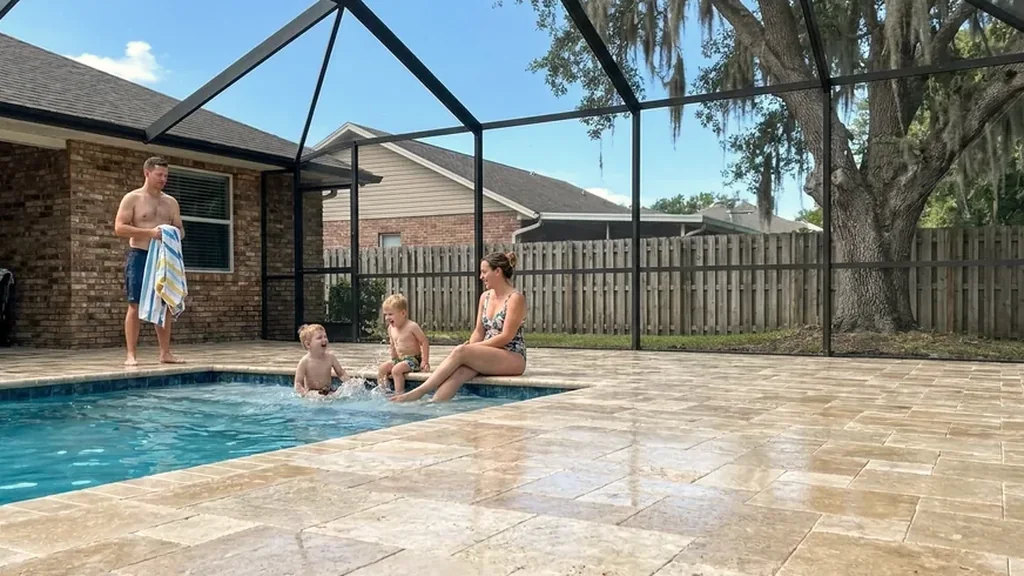
Why hire a local paver sealing contractor in San Jose?
Stucco, stone, wood frame and brick can all sit beside pavers in San Jose, and each one asks for a slightly different rinse. A local contractor plans for that, and you can send in the short estimate form to set up the first look.
Seen before priced
The contractor visits first and quotes second. A look at your San Jose pavers costs nothing and commits you to nothing.
A yardstick for bids
Published prices across Northeast Florida run $1.75 to $3.25 per square foot to clean, sand and seal. Measure any quote against it.
Finish by house style
Matte tends to suit older stone and shaded courtyards. A wet look deepens color but shows wear sooner.
Decisions stay with you
Date, finish and go-ahead are yours. San Jose lots vary, so the contractor explains the options before you commit.
Get Your Free Estimate in San Jose
Tell us about your pavers in San Jose.
Free, no obligation
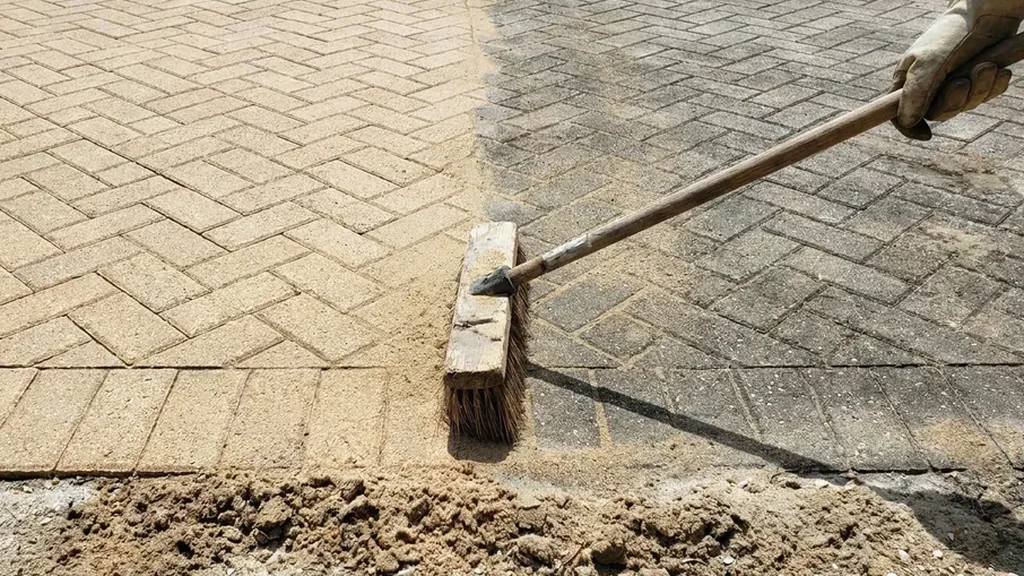
What paver problems show up most in San Jose?
Green film where the oaks hang low
A Wikipedia profile says many San Jose streets are shaded by large oaks with draping moss. Under that kind of cover a walkway or courtyard stays damp longer, and heavy shade is the slowest to dry. Damp, shaded pavers are where green film and black mildew tend to start, and the green often returns to the same corners. A wash lifts it, and a sealed surface is easier to keep clean afterward, though even a sealed courtyard under the oaks still needs an occasional rinse.
Wet sand under the pavers
The USDA's Mandarin soil series was first described in Duval County. It is fine sand with a water table that can rise to within 18 to 42 inches of the surface, and dark, organic-coated layers sit roughly two to three feet down. After a hard summer storm, ground like that can stay soggy, so a lawn beside the pavers may stay soft. Sealer needs a dry surface, which means a wait. Pavers that look dry on top may still hold moisture in the joints, which is why a quick look at the surface is never enough. The series' type location sits in Duval County about 3,000 feet north of Atlantic Boulevard, so the same kind of ground runs well beyond San Jose.
Rinse water near stucco, stone and old wood
San Jose Estates was designed in the Mediterranean Revival style by Marsh and Saxelbye in the 1920s, and homes here still range from Spanish Revival to small wood-frame starters. Pavers often run right up to those walls, and later owners have added walls and fences of their own. A careless rinse can streak stucco or soak old wood trim. The contractor needs to know what your house is made of before any wash begins. Careful work protects the finish on the house as well as the pavers. The former San Jose Hotel, now home to the Bolles School, shows how long the Mediterranean style has stood here.
River humidity and pool splash
Waterfront homes sit beside the St. Johns River, and the air there stays damp. Humid air keeps shaded corners from drying, so green film often returns to the same places. A Jacksonville paver company says chlorine splash from a pool leaves a residue that dries white and stresses sealer. On a river lot with a pool, both are in play, so expect the pool deck to need its own plan. Rinsing the deck between coats helps, and the contractor can say how often.
A coat from a past owner
San Jose houses have changed hands for close to a century. Epping Forest, the 58-acre estate Alfred I. DuPont bought, finished its 25-room mansion in 1927, so many lots here have long histories of repair. A patio added in one decade and a driveway in another may carry different sealers. Water-based sealer cannot go over solvent-based sealer, and a white, hazy or flaking coat may have to come off first. The contractor checks a small spot before quoting, so nobody has to guess.
Do waterfront homes and inland homes in San Jose need the same paver care?
Not quite, because the two kinds of lots live differently. A neighborhood guide says San Jose homes vary from million-dollar waterfront mansions to small wood-frame starters. River lots have damp air and larger hardscapes while inland lots are smaller, and that one detail changes how the day is planned. Say if your lot is on the river or inland when you send in the short estimate form.
San Jose Estates was laid out in 1925 with John Nolen as planner, and the original buildings were Mediterranean Revival, designed by Marsh and Saxelbye. Later infill brought in midcentury modern and contemporary houses. Each style sits beside pavers in its own way, so mention yours. Call (904) 468-6386 and the contractor will ask whether your walls are stucco, stone or wood.
A big estate like Epping Forest, a 58-acre property bought by Alfred I. DuPont, shows how large some lots here grow. Bigger lots mean longer driveways and more paved area to measure. If you live near the Bolles School, the San Jose Country Club or San Jose Boulevard, send in the short estimate form and name your street.
What does paver sealing cost in San Jose?
A San Jose quote should sit near the $1.75 to $3.25 per square foot that Northeast Florida companies commonly publish to clean, sand and seal. Brick and travertine are more porous and can raise it, and heavy algae under the oaks adds washing time. For a figure on your pavers, send in the short estimate form.
Gates, stairs and tight side yards add prep, according to a Jacksonville cost guide, so a walled courtyard behind an older home takes more care than a long open drive. Call (904) 468-6386 and describe your lot. Mixed surfaces, like pavers beside concrete or stone coping, add masking time too.
| Paved area | Typical example | Clean, sand and seal |
|---|---|---|
| 300 sq ft | Small patio or walkway | $525 to $975 |
| 600 sq ft | Two car driveway | $1,050 to $1,950 |
| 1,000 sq ft | Large driveway or pool deck | $1,750 to $3,250 |
| 1,500 sq ft | Driveway plus pool deck | $2,625 to $4,875 |
Math based on the $1.75 to $3.25 per square foot that Northeast Florida paver companies publish. Your contractor sets the actual price after seeing the surface. Repairs, leveling and stripping failed sealer are usually extra.
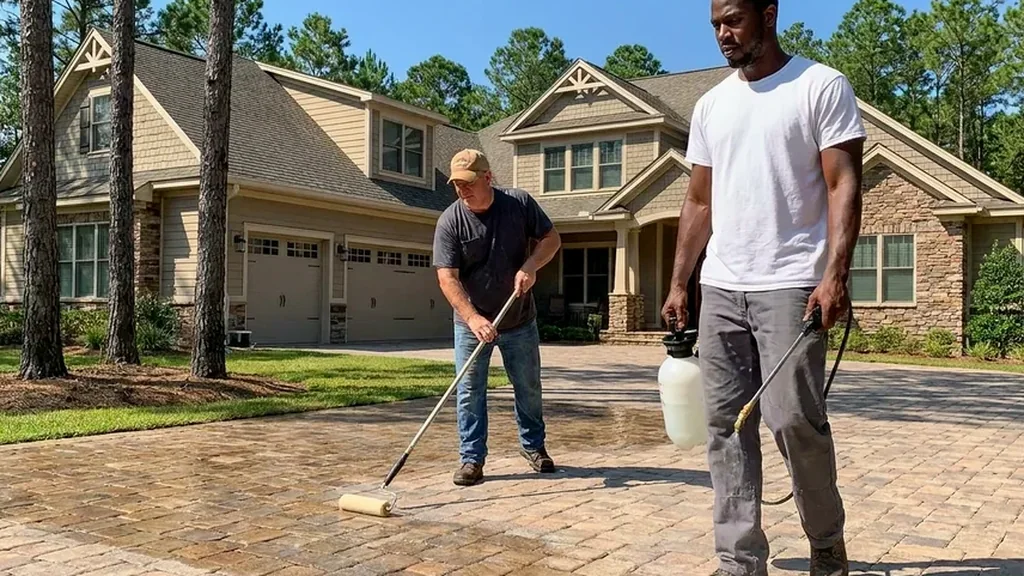
How does a paver sealing job work in San Jose?
Walk the lot
The contractor notes how rain leaves your San Jose pavers and flags sunken spots for repair first. You say what the nearby walls are made of. A test spot shows whether an earlier coat is down. Gatehouses, courtyards and long drives are all common here, so the contractor also asks how the work crew will reach the pavers. The original plan had four gatehouses, so mention any gate or guard that controls access to your street.
Wash with care
Green film, tannin, oil and rust come off. Near stucco, stone or old wood the rinse stays low and controlled, and shrubs are covered first. A pool deck gets extra attention for chlorine residue. Pool decks beside the river get a thorough rinse, and stone coping or tile edges are protected from stray spray.
Joints are topped up with new sand
Washing empties the joints, so silica sand is brushed back in. The fine sand common in Duval County drains fast, which is why joints empty so easily. Full joints keep the pavers snug and the weeds out. Joints beside a stucco wall or a planter bed are checked twice, since sand tends to wash out there first.
Give it time
Shade and river air slow drying. The contractor feels the pavers and reads the forecast, and holds off while either is wet. Waiting beats a cloudy coat. A shaded courtyard under the oaks can need hours longer than an open drive. The schedule allows for that.
Seal and walk it
Sealer is sprayed and back-rolled. Walking is fine within hours, and cars stay off for about a day. You walk the finished job with the contractor, and later a bead test of water shows the coat still works. Ask for a short written note of what went on each surface, so the next coat can match it.
Complete paver services in San Jose
Oak shade over San Jose walks leaves green film and tannin, so every job begins with a wash that lifts both. Joint sand returns before the coat, and the coat waits for a dry surface. To ask how long each stage runs on your lot, call (904) 468-6386. Walks under the oaks may need a second rinse before the coat goes on.
River-side decks collect splash and humid air. Walks under the oaks stay damp, and open driveways fade first. Brick and travertine take more sealer and often need a product picked for them, so send in the short estimate form and list what you have. Pool decks near the water also collect splash, so a closer look at the edges pays off.
Whatever is already on the pavers narrows the sealer choice, because water-based and solvent-based products do not mix. Matte suits older stone and shade, and wet look gives the deepest color. Call (904) 468-6386 to match the finish to your house. Write the product name into your records so a later coat can match it.
Summer rain falls hard here, mostly May through September, and the water table in the local soil can sit 18 to 42 inches down. Shade slows drying, so a San Jose date may slip a day or two. Most quotes run two to five years from coat to coat; to choose a date that fits, send in the short estimate form. A morning start leaves more dry hours before afternoon clouds build.
Questions to ask before you hire
- Will you tell me the square footage you measured and what each square foot costs?
- How do you decide between a natural look and a wet look finish?
- If a patch peels or turns cloudy later, who do I call, and what happens next?
- Can I see a written estimate with the sealer product and the number of coats on it?
- Do you give the pavers time to dry fully after the wash, or seal them the same morning?
- How do you protect my palms, shrubs and flower beds from the wash water and sealer?
- Has the sealer you plan to use been tested on pavers near salt water and sea spray?
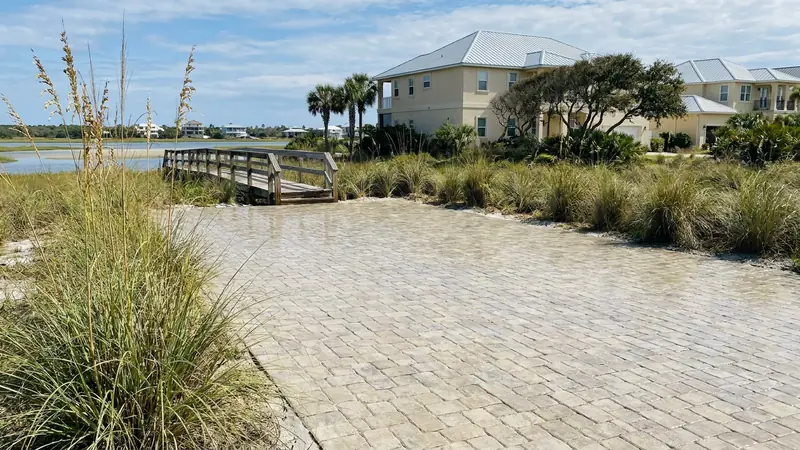
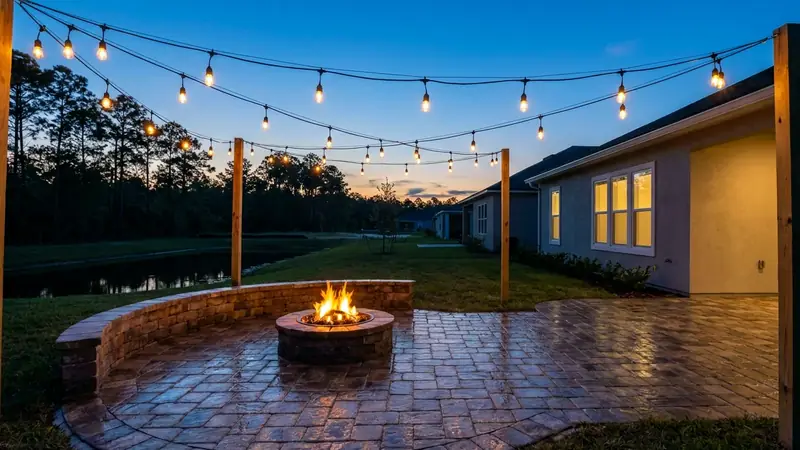
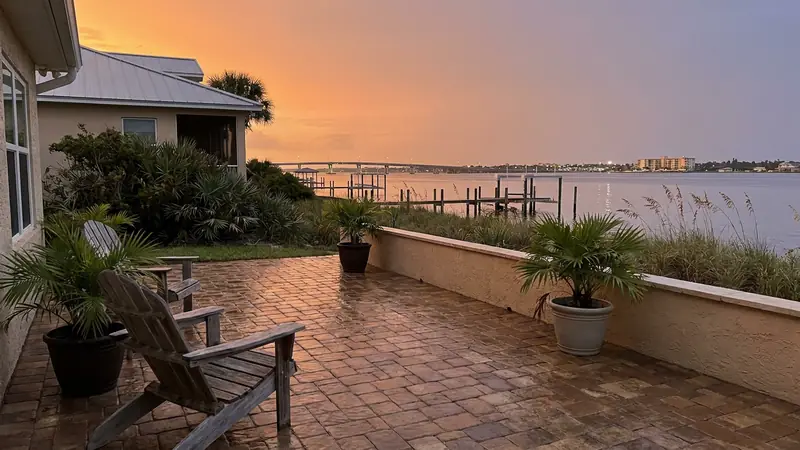
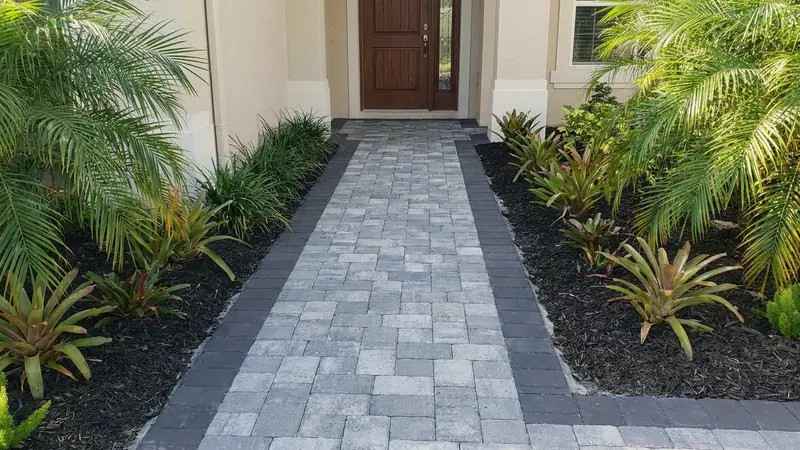
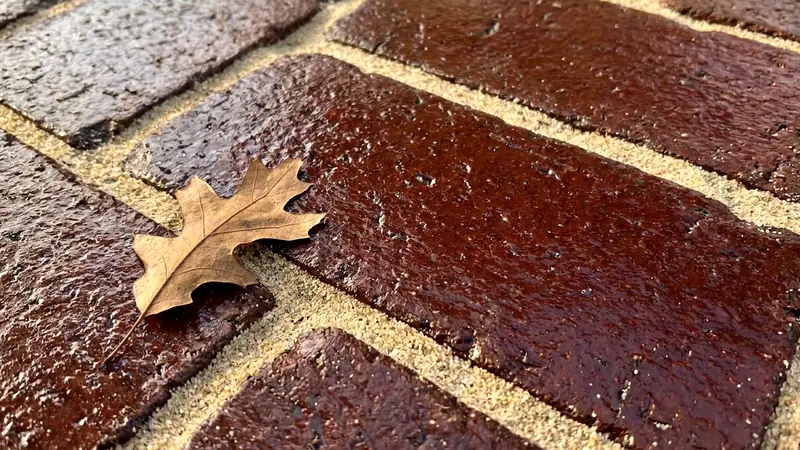
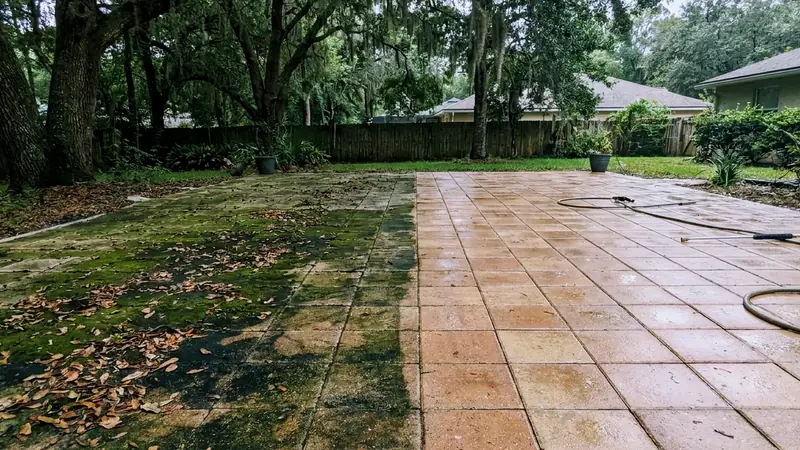
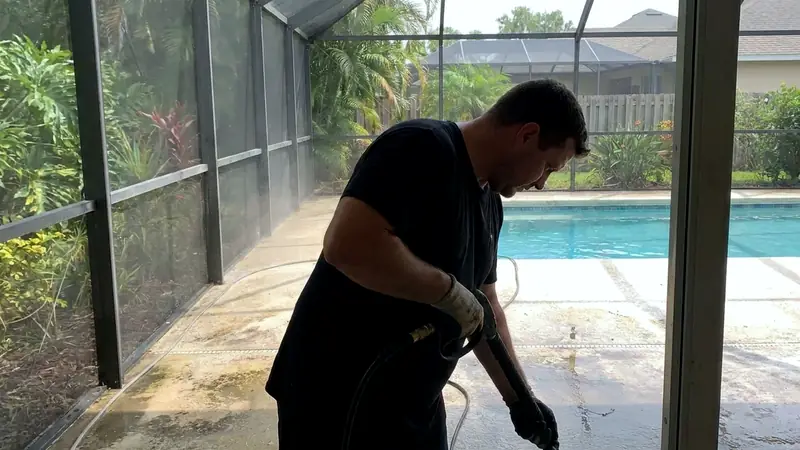
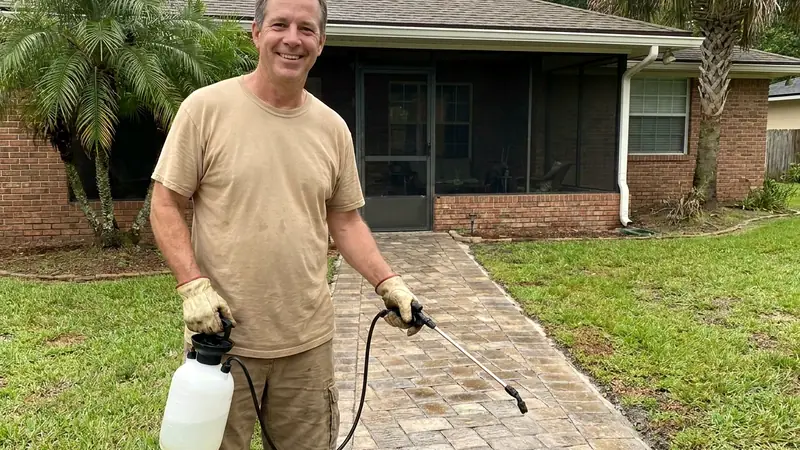
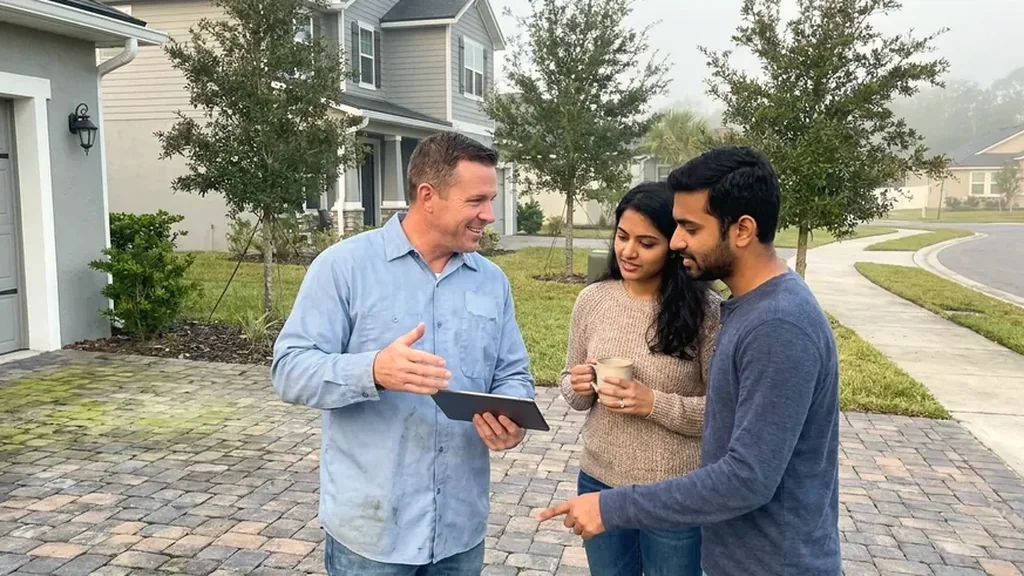
What do sealed pavers look like around San Jose?
Why local matters in San Jose
A contractor who knows San Jose asks the right questions about your lot. Is it on the river or inland, and is the house stucco, stone or wood frame? Those answers shape the wash, the rinse and the sealer. For someone who knows this stretch of the Southside, call (904) 468-6386.
Local experience helps with timing, since damp river air and oak shade slow drying and summer storms arrive fast. A contractor used to that starts early and leaves time for the surface to dry. If rain moves in, ask how the date shifts when you send in the short estimate form. That plan keeps your own schedule in mind.
Older homes also carry history, since San Jose houses have changed hands since the 1920s. A past owner may have used any sealer on the pavers, so a local contractor checks before choosing a product. Bring what you know about the house, then send in the short estimate form. The more you know, the faster the quote.
What is San Jose's history, and why does it matter for my pavers?
San Jose began as a planned city, and that plan still shapes the streets. A charter for San Jose Estates came in January 1925, and John Nolen was hired to design it, with a hotel, golf course and gatehouses. The San Jose Hotel opened on January 1, 1926 and closed in 1928, and the Bolles School later took over the building. Near San Jose Boulevard, call (904) 468-6386 and name your street.
The land boom crash left the plan unfinished, so lots filled in over many decades. That is why a street here can have a 1920s Spanish-style house beside a midcentury one. Landmarks include the San Jose Country Club, Epping Forest and the Bolles School campus. Pavers from different years mean different sealers, so send in the short estimate form, free of charge, and share the age of yours.
Frequently Asked Questions
How much is paver sealer per square foot in San Jose?
Expect a published range of $1.75 to $3.25 per square foot across Northeast Florida for the clean, sand and seal. A San Jose job may land higher if old sealer must be stripped or the area is small. San Jose lots range from small inland parcels to river estates, so ask that the total square footage appear on the quote. ZIP codes 32217 and 32257 both cover parts of the neighborhood, so name your street.
Is it good to seal pavers in San Jose?
Yes, because sealer helps hold joint sand in and slows fading in summer sun. San Jose pavers also deal with oak shade, damp river air and heavy afternoon rain, and sealing makes the surface easier to keep clean. Shaded courtyards under the oaks may hold a coat longer than a sunny drive, though they need more washing.
How long do paver sealers last in San Jose?
Most quotes run two to five years from one coat to the next. Shaded courtyards tend to wear slower than sunny driveways. A simple check is to sprinkle water on a dry paver: if it beads, the coat still works, and if it soaks in and darkens the paver, it is time to reseal.
Is it better to spray or roll paver sealer?
A Jacksonville paver company says pros spray the sealer and then back-roll it, which gives even coverage and works it into the joints. Rolling alone can leave lap marks, according to the same company. Ask which method and product the contractor plans to use, and ask for the product name too.
What kind of sealer works for Florida pavers?
Pros use water-based and solvent-based products, and whatever is already on the pavers limits the choice. If solvent-based sealer is already down, a water-based coat cannot follow it. Matte, semi-gloss and wet look are the finishes to choose from after that. Brick and travertine often need a sealer chosen for them, so say what you have.
Can a contractor seal pavers beside stucco or old wood in San Jose?
Yes, with care. The wash and rinse are kept low and controlled so water does not streak stucco or soak old wood trim. Stone coping and tile edges around a pool are protected from stray spray as well. Tell the contractor what the walls are made of when you ask for an estimate, and mention any orange lines left by irrigation.
What happens if it rains on the day pavers are sealed in San Jose?
The contractor waits, since sealer needs a dry surface. Shaded or river-side pavers may take longer to dry than a sunny drive, and shade and damp air near the river can add another day. A new date is set once the surface is dry.
Why is paver sealing so expensive in San Jose?
You pay for a deep wash and new joint sand as well as the sealer. Published prices in the region run $1.75 to $3.25 per square foot for everything. A small area, tight access or old sealer that must be stripped can add to it. A gated lot or a walled courtyard adds prep time, according to a Jacksonville cost guide.
Ready for a Free Estimate in San Jose?
Call (904) 468-6386 and tell us about your pavers.
Free, no obligation